
Festival Overview
Wireless Festival is a prominent annual music festival held in London, England. Known for its diverse line-up of popular artists spanning various genres such as hip-hop, R&B, electronic, and pop music, the festival attracts a large audience of music enthusiasts each year. Typically taking place over a weekend during the summer months, Wireless Festival features multiple stages hosting live performances by both established and emerging artists. The festival offers attendees a vibrant atmosphere, food vendors, and other entertainment options, making it a highlight of London’s summer cultural calendar. The festival is located inside Finsbury Park which is a large grass area surrounded by hotels and other entertainment for users to explore which makes it an effective location to take place in.
The festival has a wide range of variables to consider when thinking about the problem space. A few examples of this is inviting popular artists, organising the festival, considering any instruments (hiring or buying), selling tickets, provide food and drink, provide shower and toilet facilities, and providing security and travel for the users. These problems can be easily overcome though various solutions.
Travel can be arranged through the sponsorship of The Big Green Coach (www.biggreencoach.co.uk) which the users can hire out to use on the website/app, this solution also applies to food and drink at the festival through other sponsors such as Bacardi and Gopuff. Other issues in the problem space can be easily solved by hiring out currently trending artists from a variety of genres which ensures most users will enjoy at least one of the performances which will reward them with a positive experience.
Usability Goals
The Wireless Festival website successfully reaches many of it’s usability goals. For examples the website successfully hits it’s “Consistency” and “Learnability” goals, this can be seen as throughout the website it is easy to navigate and understand where to go due to the clear and big title texts which show the user where to go. The design is also consistent throughout various pages sticking to the same colour scheme and typefaces. However some goals have been failed such as “Accessibility” this is as the website does not include keyboard navigation or alternative text for images, this is a huge negative effect as the line up list is featured as a large image not text, this means that with no alternative text users that may be visually impaired cannot read the line up for the festival.
Problem Space
The problem space is slightly varied from the main website and the companion app, both still fulfil user needs however the companion app has some upgraded features, such as an interactive map with an AR camera feature to guide users to the selected key area on the map such as the toilet facilities.
Requirements Gathering and Analysis
My audience is teenagers and young adults, the age ranging from 16-29. The assumptions the stakeholders will have for my festival is varied dependant on the stakeholder, for example the assumptions Artists, Customers, Security and the Council will assume that the festival will be up to regulation, safe and full of other customers to keep the atmosphere positive. However other stakeholders such as Food + Drink vendors and Sponsors will assume that the festival will result in a boost in profit and user engagement in their social media and products.
Artists – selling lots of tickets
Customers – having a good safe experience
Food + Drink Vendors – selling a lot of food
Emergency Services – keep customers and artists safe
Council – making sure everything is organised up to regulations
Security – keeping the artists and customers safe
Sponsors – promoting their own products
User Needs
My user needs overlap in various areas but are still vastly different from one another. An example of this can be seen as artists and customers need safe travel to be arranged so that they can arrive at the festival, they also both require safety requirements to be met such as safe use of pyrotechnics. However other users such as food and drink vendors need customers to buy food from their stands. Success is also slightly overlapping between artists and customers as both users will have their needs met if they have a safe and positive experience during the festival, however the food and drink vendors will measure success dependant on the amount of profit and popularity they’ve achieved within their businesses.
Artists – selling lots of tickets
Customers – having a good safe experience
Food + Drink Vendors – making profit
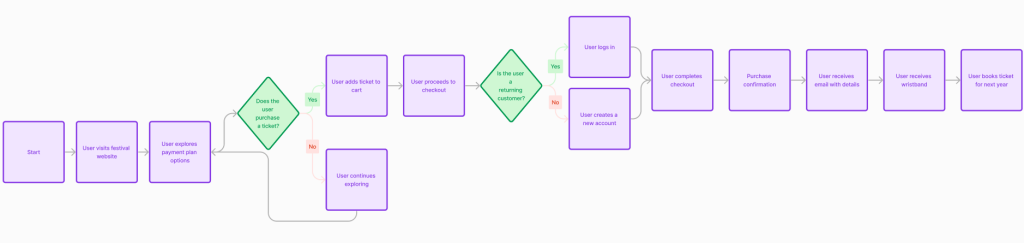
Hierarchal Task Analysis
Accessibility Concerns
Wireless Festival Website – (https://wirelessfestival.co.uk/)
Reading Festival Webiste – (https://www.readingfestival.com/)
Leeds Festival Website – (https://www.leedsfestival.com/)
Glastonbury Festival Website – (https://www.glastonburyfestivals.co.uk/)
After looking on online forums such as Reddit and the festival websites mentioned above, I gathered a few common experiences that users have encountered. One of these is difficulty arranging travel, many festival websites either lack travel arrangement or have it too hidden inside their websites. To overcome this problem the Wireless festival will have a clear “Travel” section where they will be able to access The Big Green Coach bookings to arrange travel. Another issue is the lack of alternative text which is a big issue for visually impaired users. The Wireless website will overcome this by ensuring all important imagery will contain alt text to support visually impaired users.
Accessibility concerns on the current Wireless website are that there is no images with alt text, this has a huge negative impact on the user experience of visually impaired users. This is because the artist line-up is one large image on the website. This means that visually impaired users will struggle to know what the line-up is for the festival. This can be overcome by adding alt text on all images used to ensure visually impaired users can obtain the information they are searching for.
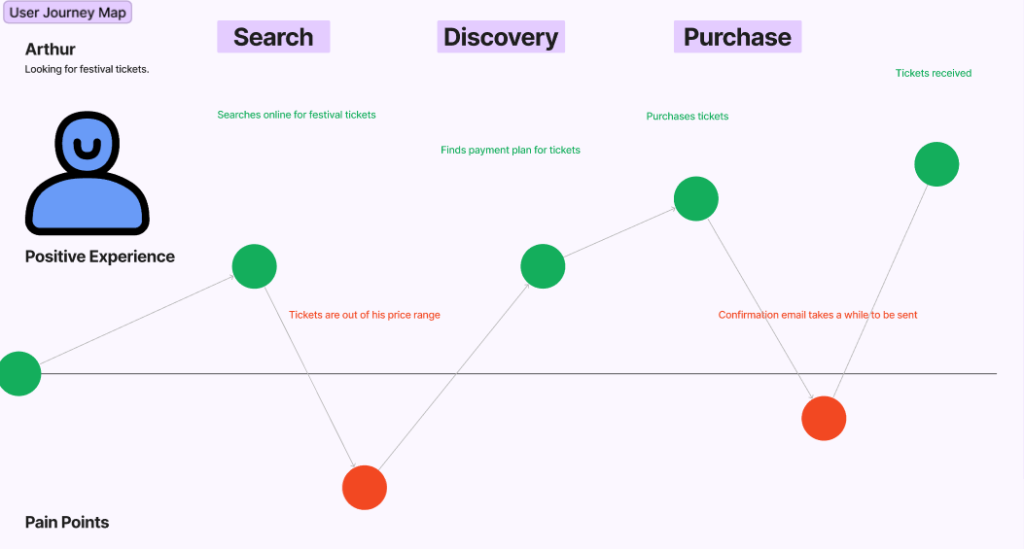
User Journey Map
A User Journey Map is a visual representation or narrative that outlines the steps and interactions a user takes when engaging with a product, service, or system. It provides a holistic view of the user’s experience, from initial contact through to achieving their goals or completing tasks.
Stakeholder Personas
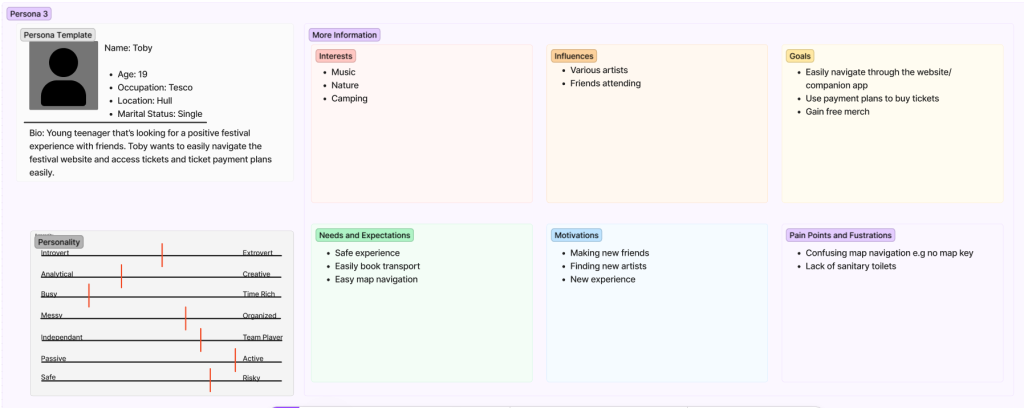
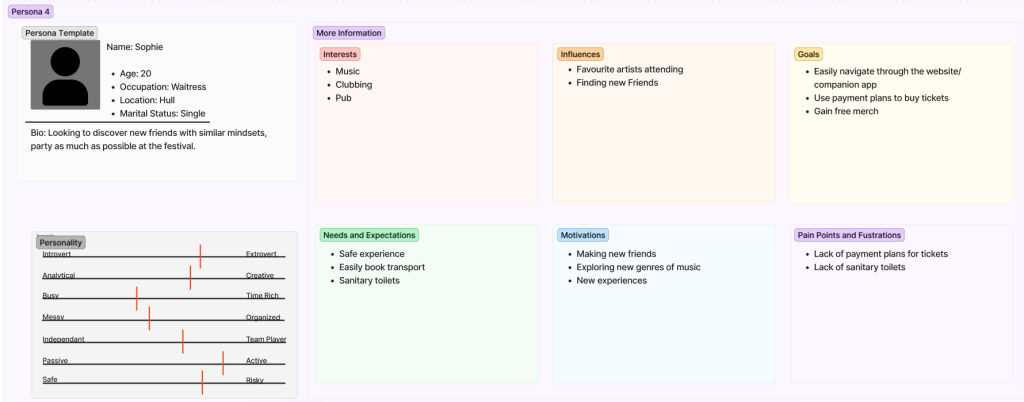
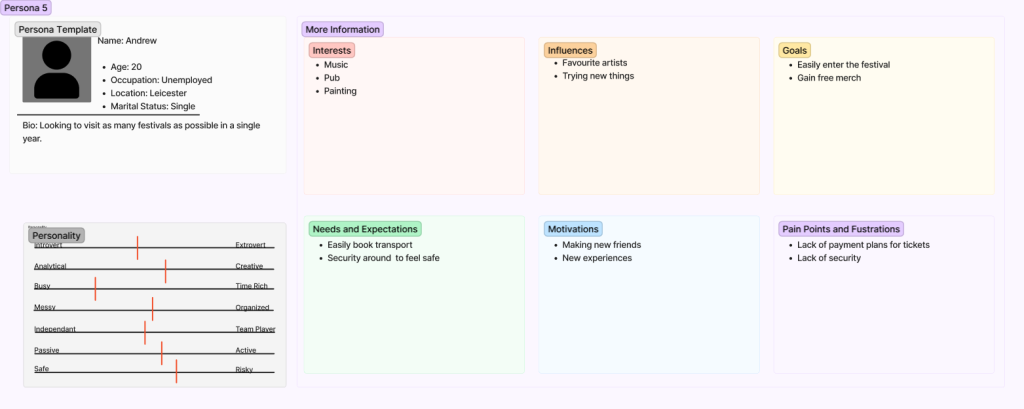
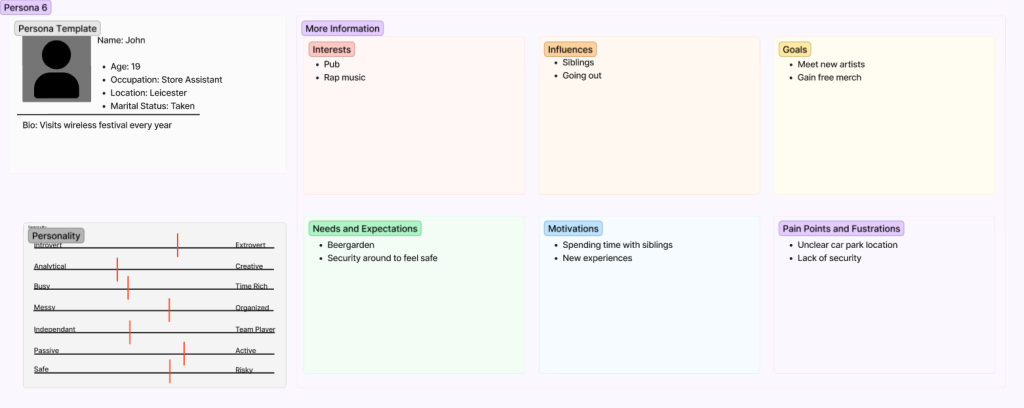
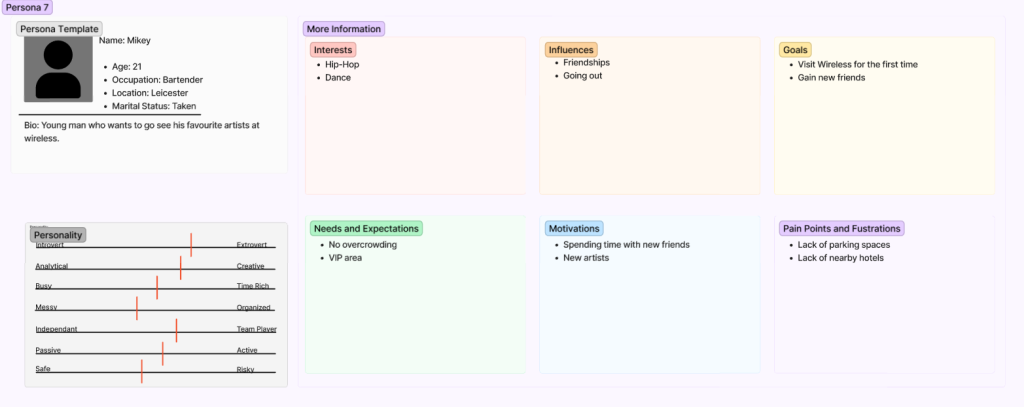
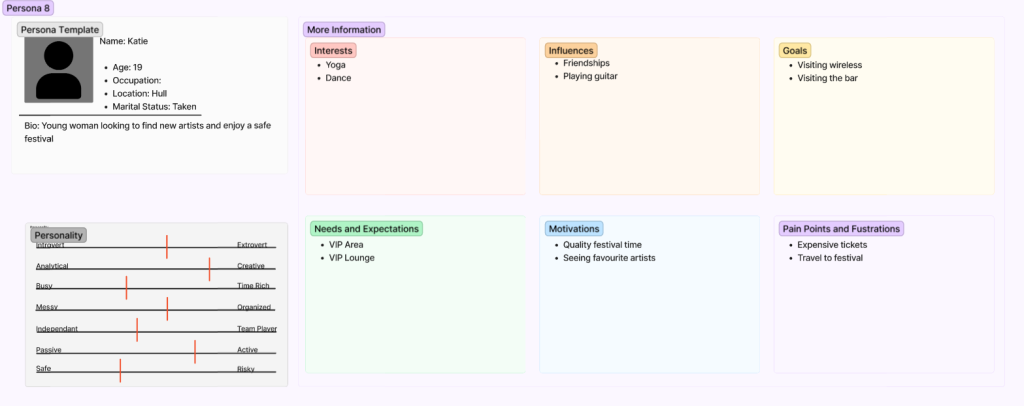
Success for my design will result in an accessible website which considers a variety of users such as visually impaired users. The website and app will also provide a smooth and seamless journey from the homepage to the checkout page without having any confusion or lack of accessibility affect their experience.
The assumptions I have for my festival is that all artists will attend without last minute cancellations, another assumption is that the festival is up to regulation with the council ensuring that no accidents happen on stage that could harm any users.
UI Principles Applied To My Design
One design law used in the new wireless website is Fitts’ Law. Fitts’ law (1954) states “that the amount of time required for a person to move a pointer (e.g., mouse cursor) to a target area is a function of the distance to the target divided by the size of the target. Thus, the longer the distance and the smaller the target’s size, the longer it takes.” This means that in my designed website my call to action will be prominent and easy to spot, this will not only help visually impaired users but help all users to easily identify where the call to action is quickly.
My design will provide feedback by having an animation play whenever a button is hovered over/ interacted with. This will provide users with a more engaging website which will keep their attention span onto the website which means they’ll stay on the website longer which further increases the chances of a purchase being made.
Call to action – Defining what this may be and the number of steps required to complete.
The usability goal the new wireless website will have is that it will be easy to learn, this means that users of all ages will be able to purchase tickets thanks to the clearly labelled buttons across the app and website.
Artists will have a separate log in page, much like many schools have a “teacher” and “student” log in separately. An example of one of the differences this will have is that the artists will automatically have a barcode inside the app to access the VIP and backstage areas, meanwhile the regular user will have to buy a more expensive ticket or upgrade the standard ticket to access these areas.
Rejected Design
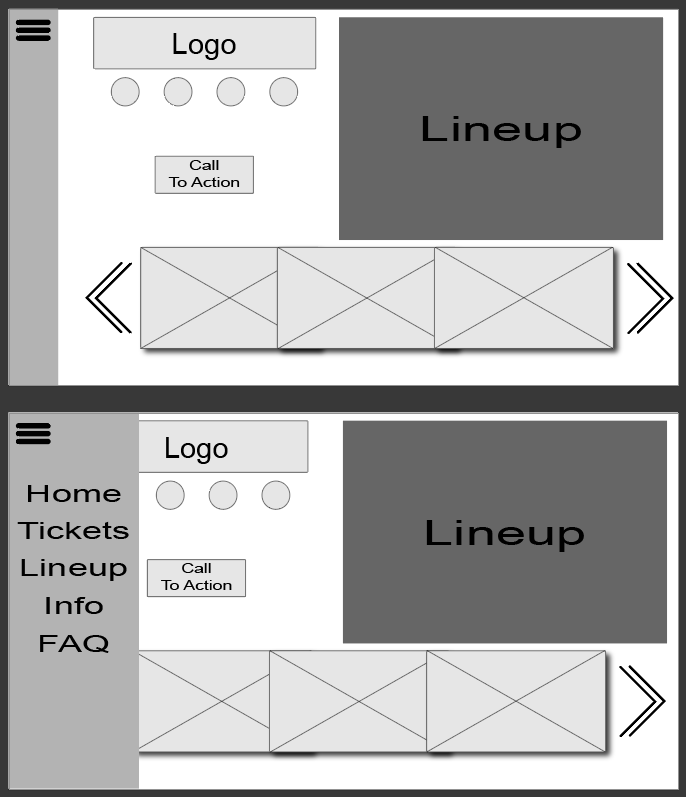
This rejected design doesn’t work due to the overcrowding of the key items such as the call to action, line-up and imagery. This goes against the “easy to learn” usability goal the website will achieve.
Low Fidelity UI Prototype
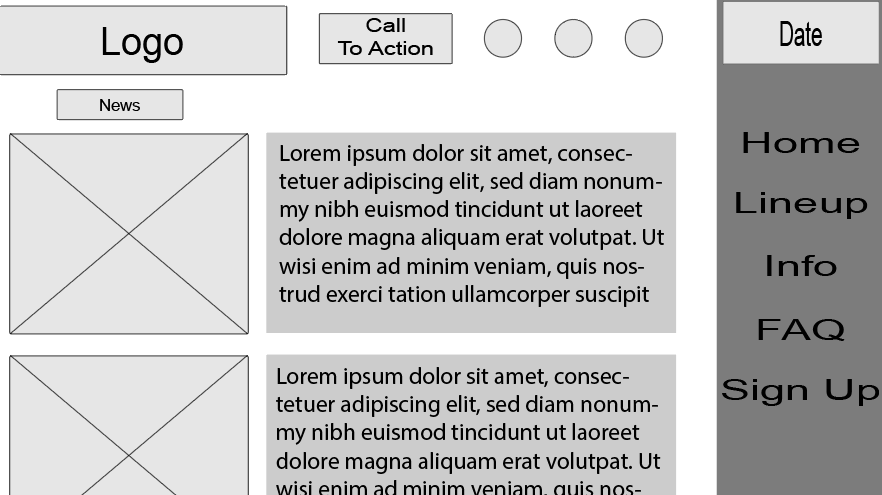
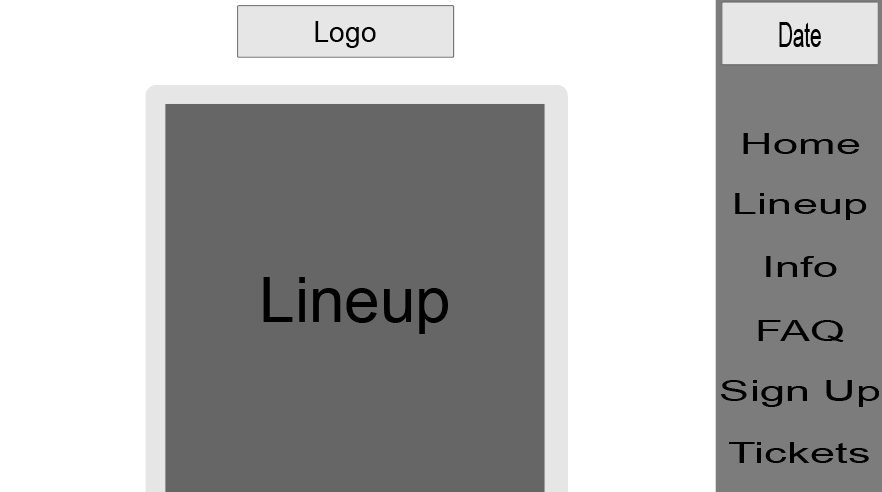
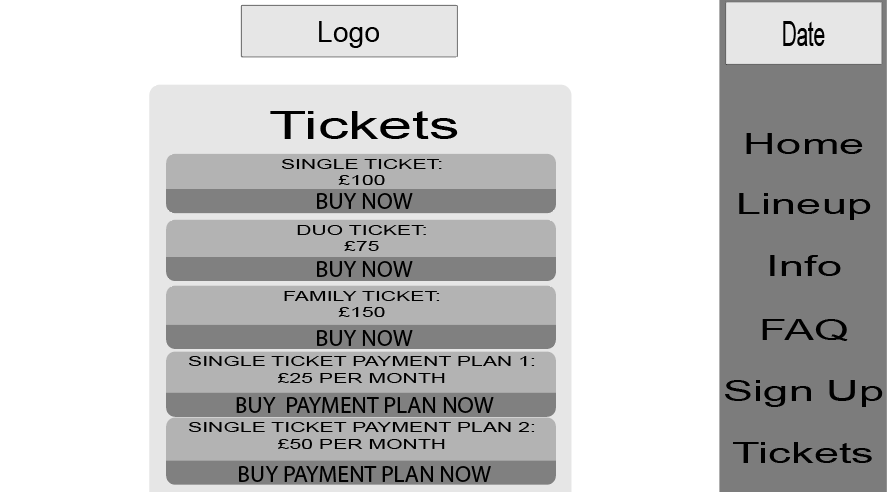
Low-fidelity prototypes is an early-stage version of UI that provides designers with a simple wireframe to experiment and gather feedback. Below are the the Low Fidelity Protypes for the new wireless website.
One constraint in my design is limited options for the users. This is because it allows the user to focus on the most important choices and stops them from feeling overwhelmed. This helps the user also make decisions faster which is a sign of good UI and UX design.
Low Fidelity Website Prototype
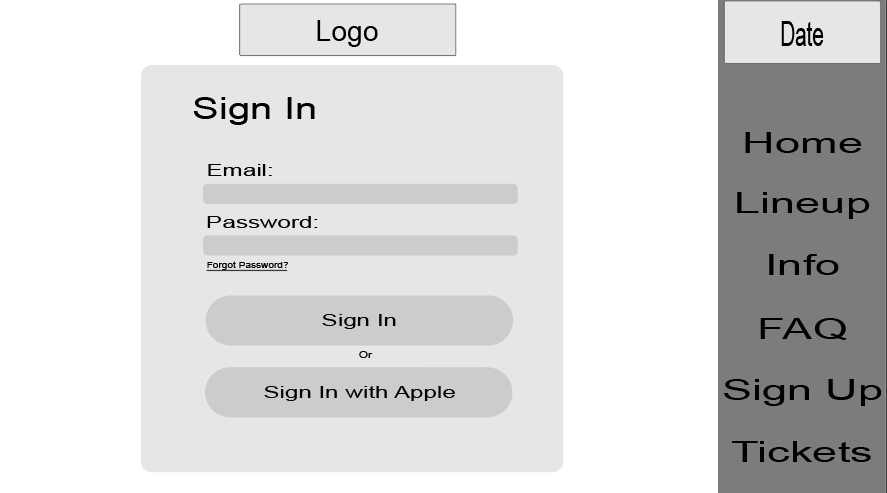
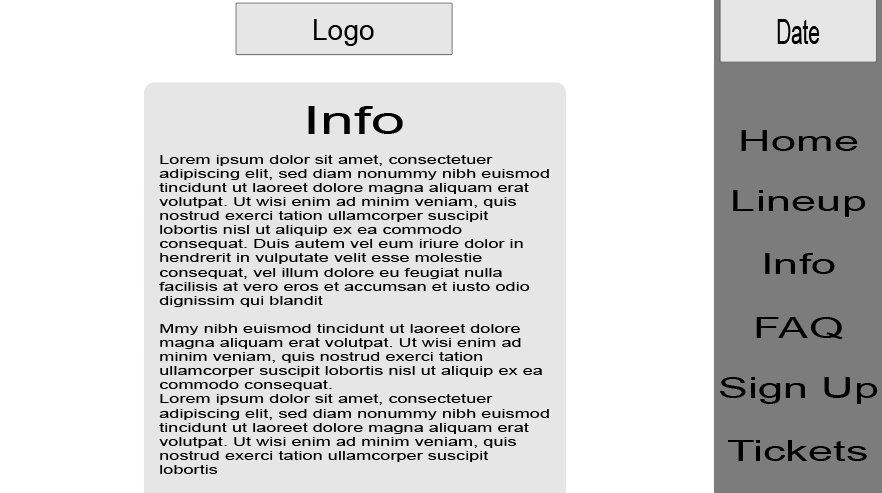
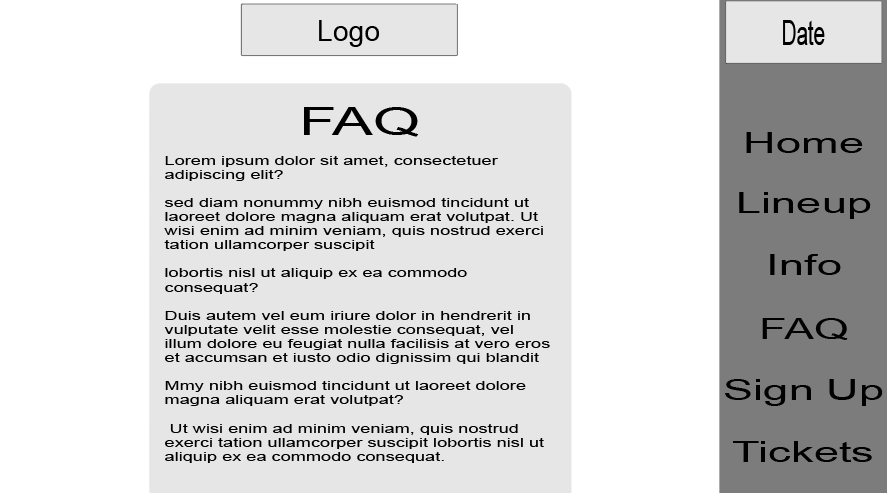
Low Fidelity App Prototype
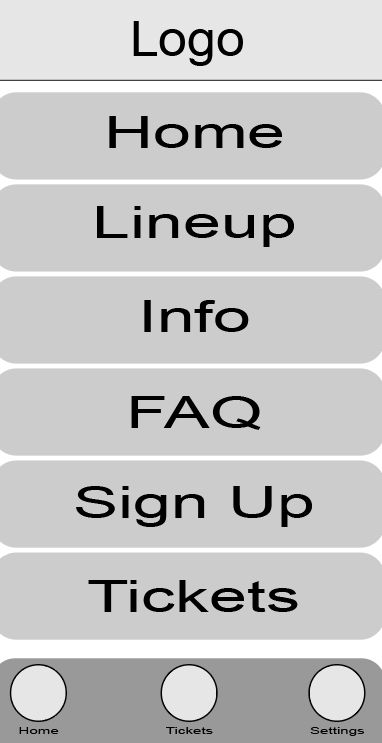
Wireless App Prototype Home Page
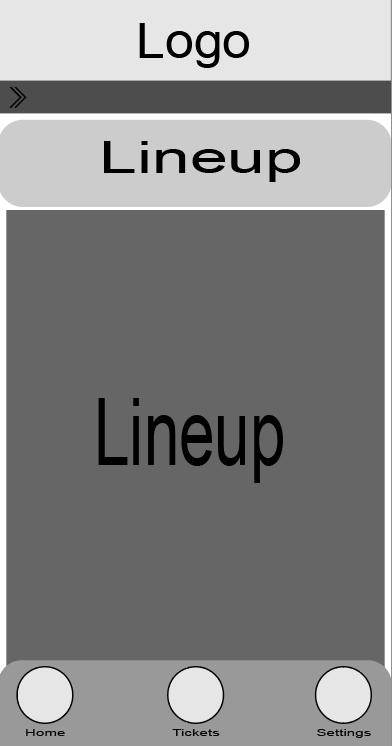
Wireless App Prototype Line-up Page
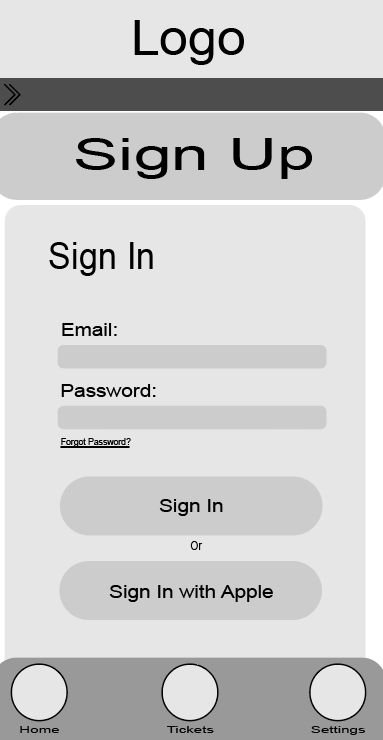
Wireless App Prototype Sign Up Page
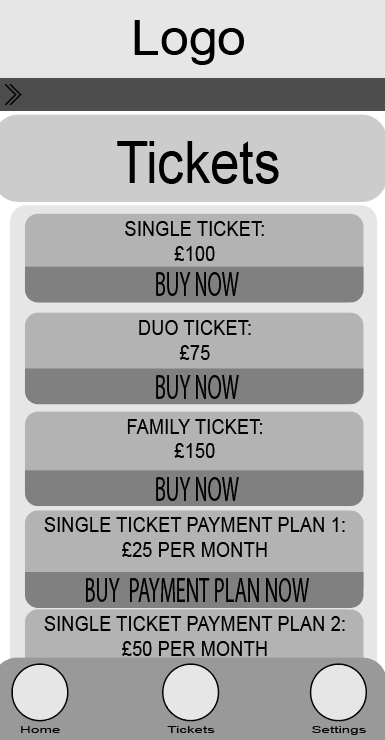
Wireless App Prototype Ticket Page
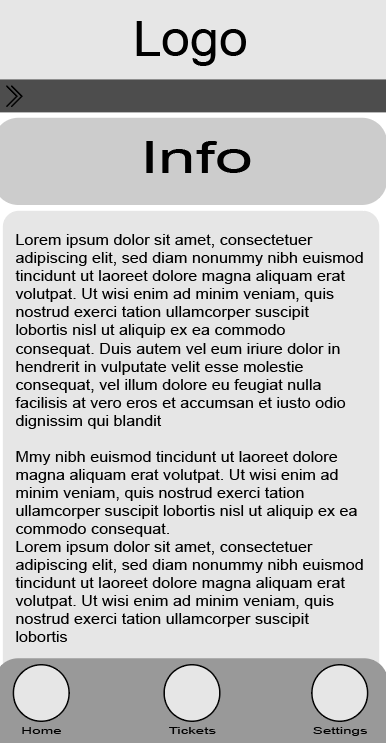
Wireless App Prototype Info Page
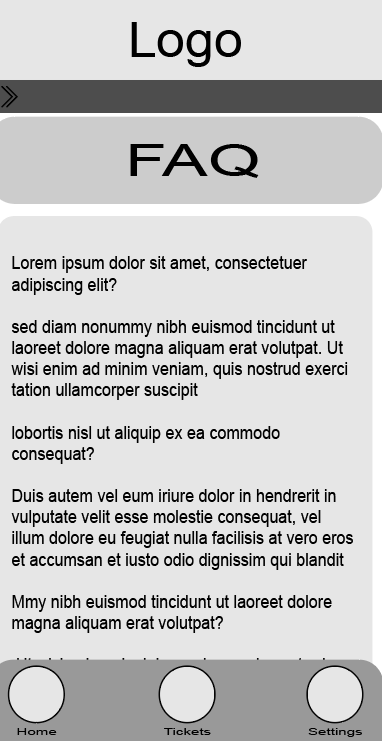
Wireless App Prototype FAQ Page
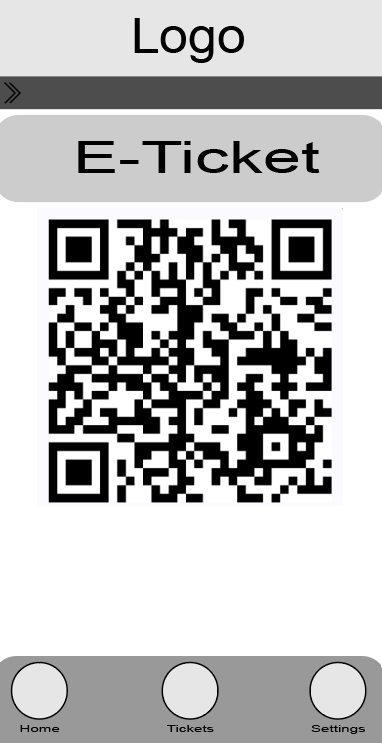
Wireless App Prototype E-Ticket Page
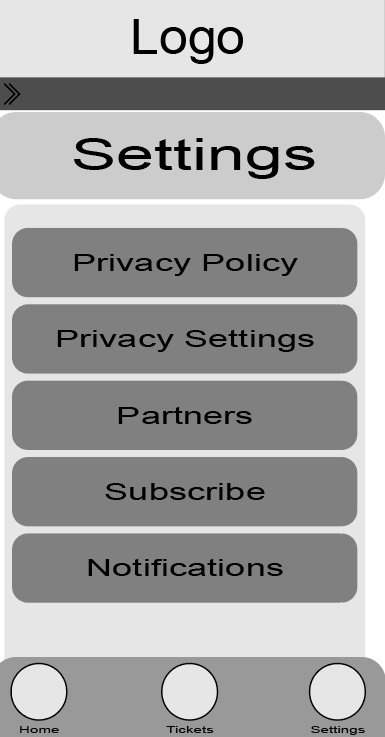
Wireless App Prototype Settings
References
Big Green Coach, 2024, Available at: Coach Travel, Festival Tickets. Gig Tickets. The largest coach travel company in the live music festival industry | Big Green Coach – The Events Travel Company (accessed February 23, 2024).
Bacardi, 2024, Available at: Bacardi Limited The largest privately held spirits company in the world. (accessed February 23, 2024).
Gopuff, 2024, Available at: Alcohol, Food, Drinks and More Delivered To You | Gopuff (accessed February 23, 2024).
Interaction Design Foundation – IxDF. “What is Fitts’ Law?” Interaction Design Foundation – IxDF. https://www.interaction-design.org/literature/topics/fitts-law (accessed March. 8, 2024).