
Post 1: Examination of the role of web in fostering innovation and creativity
The role of web inside innovation and creativity has been vital to the whole world, especially for non profit organisations as the web has allowed them to have a massive increase in accessibility and outreach on a global scale. The web has allowed non profit organisations such as charity: water (https://www.charitywater.org/uk) to raise awareness online and provide positive and effective storytelling to expand their reach on an international scale.
The web has also been able to provide effective program delivery which means that there is a higher quality online/ cloud based service provided within the organisation. An example of this is mobile apps that are developed not only for volunteers but also for users of the organisation. An example of this is the American Red Cross (https://www.redcross.org/) which utilises a mobile app which contains instructions to help people prepare respond to emergencies.
Non profit organisations used to have to rely on local/in person donations through the use of donation boxes, however the web has allowed non profit organisations to use various online websites such as Kickstarter or GoFundMe to gain global attention or support towards their cause. An example of this is Papyrus Prevention of Young Suicide (https://www.gofundme.com/f/walk-for-teen-suicide-prevention) which have set up a page where people globally can donate towards this cause.
However despite all the positive effects the web has brought in evolving non profit organisations, there has also been downsides. One of these downsides is the challenge of increased competition for attention as more and more organisations turn to the web for support. Another downside is the risk of organisations getting hit by a cyberattack, this means that organisations are forced to invest in forms of cybersecurity as cyberattacks are on the rise. As May, M (2024) states “Almost a third of charities experienced a cyber breach or attack in last 12 months, survey finds.”
Are they effective?
Charity: Water has clearly evolved effectively online as they use their online platform to engage the users with interactive content such as clickable maps and videos on their website.
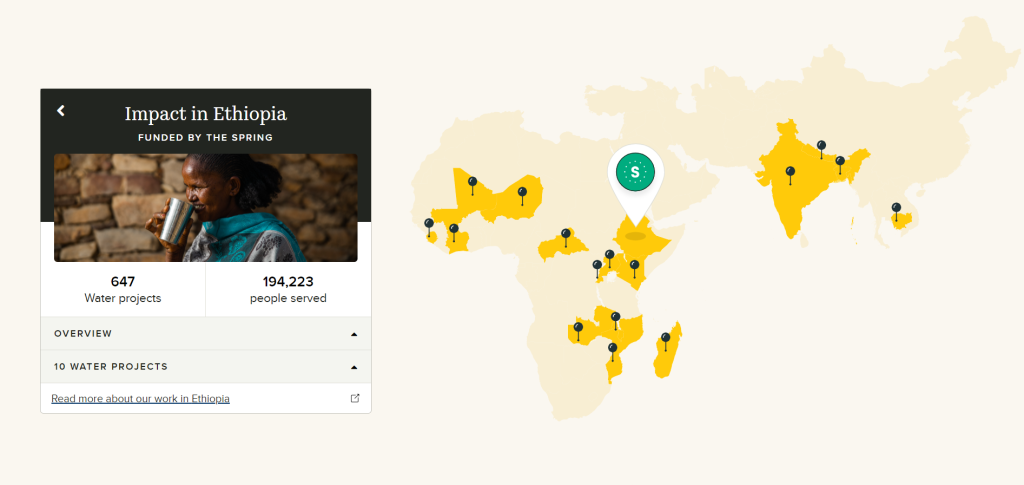
This content also shows where and how the users donations will be used which is displayed only once the user has clicked onto a certain pinpointed location. This encourages the user to click around the various locations and therefore increases interactivity within the website and encourages donations due to the people served and water projects.

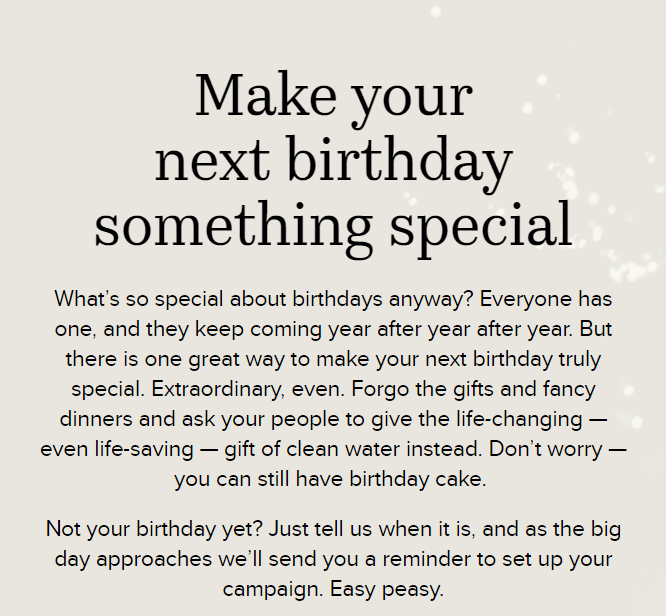
This section on the main website showcases the overall progress of the charity. This again shows the effectiveness of the webs influence and the organisations success which further supports the point that web has had a positive influence onto non profit organisations. Charity: Water does a great job using the web to connect with donors and keep things open. They share real-time updates with GPS and photos so users can see exactly where their money’s going. With creative online campaigns like “The Birthday Pledge,” they make it easy for people to get involved and help bring clean water to those in need.
Post 2: Collaborating In Web Design
What?
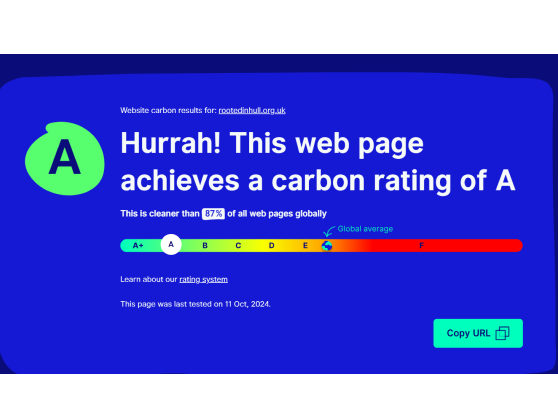
In our first group activity, I worked with Ryan and Jess to assess the sustainability of the Rooted In Hull website. We each dedicated time to analyse the site whilst focusing on its environmental impact. My role involved analysing its carbon emissions using “https://www.websitecarbon.com/,” which estimates a websites carbon footprint. This was interesting to see as it revealed how digital platforms can influence sustainability and showed how we can design websites to be more eco-friendly. I found it interesting how small design decisions can significantly reduce energy consumption.
So What?
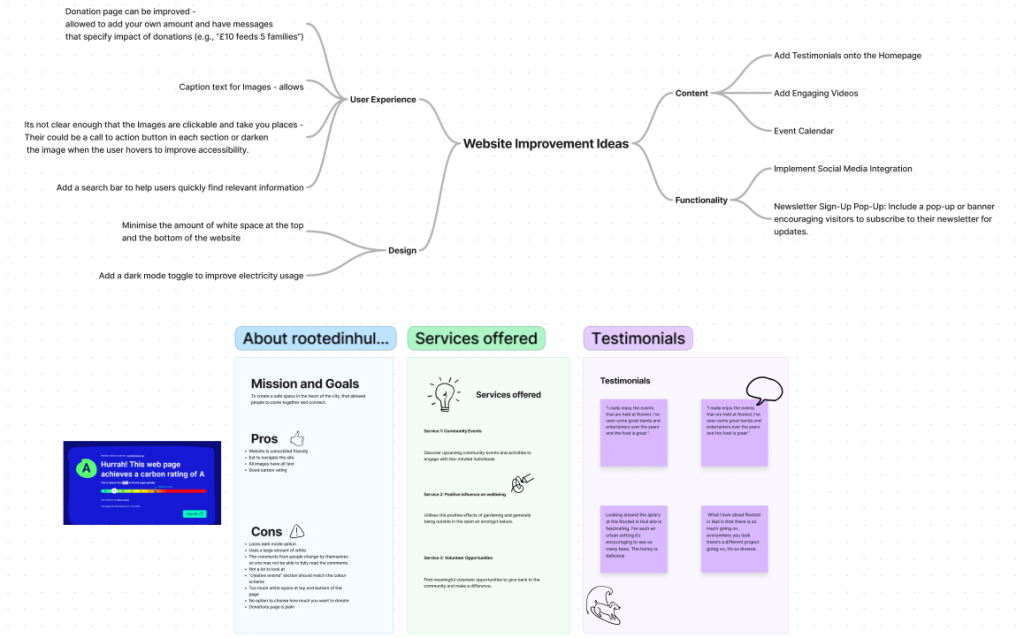
Reflecting on this experience, I appreciated how evenly our group divided the tasks, which created a positive atmosphere. Without a leader, everyone contributed equally towards our goal, leading to a presentation on Figma. During the presentation, each team member spoke about their contributions, and I felt comfortable speaking because everyone had participated equally. This reinforced the importance of teamwork which is essential in achieving a positive outcome.
Now What?
Looking ahead, I recognise the value of maintaining communication within the team to ensure we remain aligned and focused on our task. I plan to continue this positive energy in future projects, encouraging feedback and communication among team members. This experience has highlighted the need for continuous reflection on our processes, allowing us to work on our teamwork skills.
What?
For the next group activity, we were tasked with creating a variety of visuals, including static posts, carousel posts, and Instagram story designs using Adobe Express. We aimed to use interactive features like polls and questions within the stories while ensuring consistent branding across all visuals. I took the lead in this project, splitting the work between Kate, Karla, and Klaudia. I felt great satisfaction in this role, especially since I was already helping Kate during her first lesson with us. Stepping into a leadership position felt natural, and it gave me with the opportunity to manage the project effectively while ensuring everyone had the chance to contribute.
So What?
This leadership experience was rewarding and offered valuable lessons in balancing creative direction with teamwork. I felt a sense of accomplishment in how we worked together, and it deepened my understanding of project management. I realised that maintaining communication with my team was crucial to keeping everyone aligned with the project theme and to gather feedback on my own contributions. This approach helped ensure that we were all on track and felt included in the creative process and team.
Now What?
Moving forward, I intend to build on this experience by continuing to improve my leadership skills. I plan to do regular check-ins to keep everyone engaged. By doing this, I hope to improve team effort and ensure that each team member feels valued.
Post 3: Analysis Of Current Web Design Approaches
The website I’ve decided to analyse is the RSPCA website. Founded in 1824, the RSPCA is a UK charity focused on animal rescue and protection. They rescue and rehome abused animals. Funded mostly by donations, they run shelters, clinics, and outreach programs across the country.
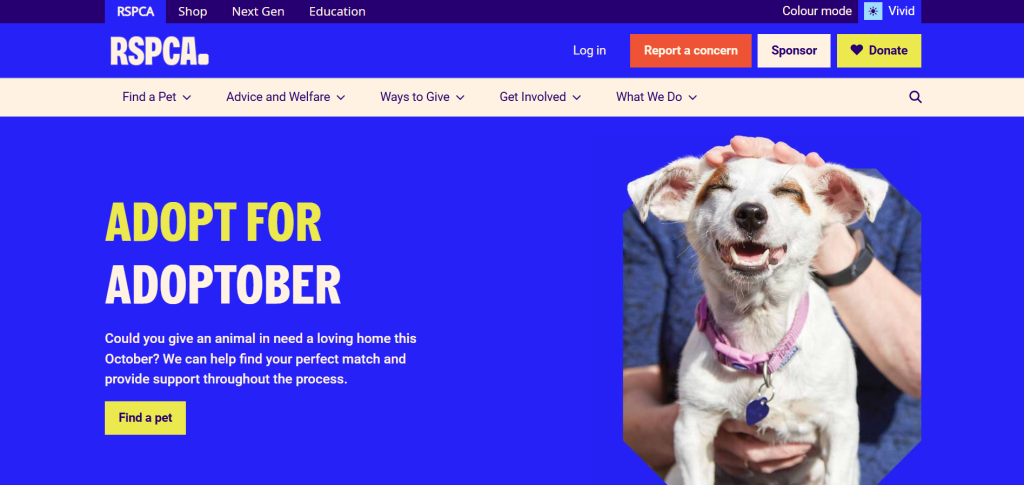
I started by examining the site’s accessibility features to see what is included and what might be lacking. A positive feature is the colour mode toggle in the top right corner, allowing users to switch between a bright, colorful mode and a more dull version. This choice improves accessibility by reducing eye strain, which can be particularly beneficial for visually impaired users or anyone sensitive to bright screens. The toggle’s design helps make the website more user-friendly, offering options for varied visual needs.
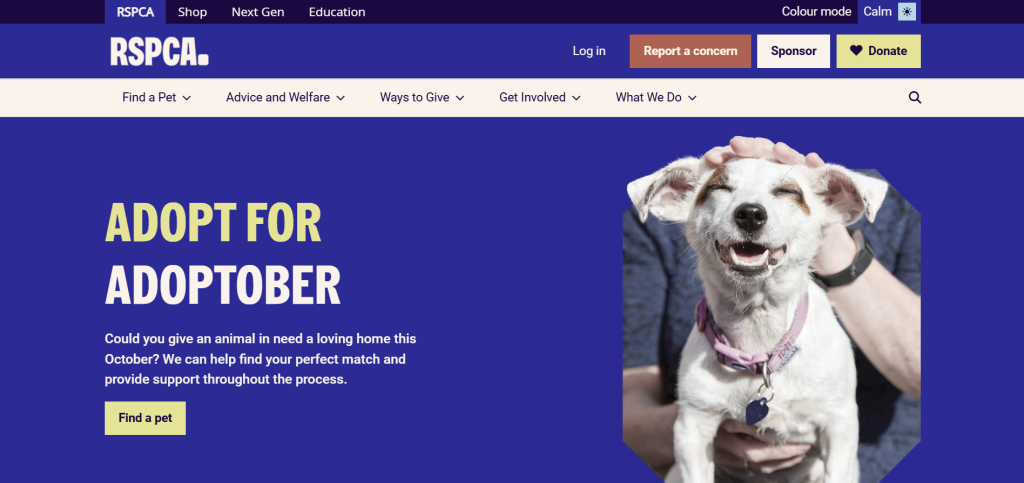
However, there is also a drawback to this. Whilst the vivid mode is appealing, the brighter colours increase the website’s digital carbon footprint due to the energy needed to display them. This can have a negative environmental impact, as higher energy consumption online contributes to carbon emissions. Balancing visual appeal with accessibility and environmental considerations could make the site even more effective and sustainable.
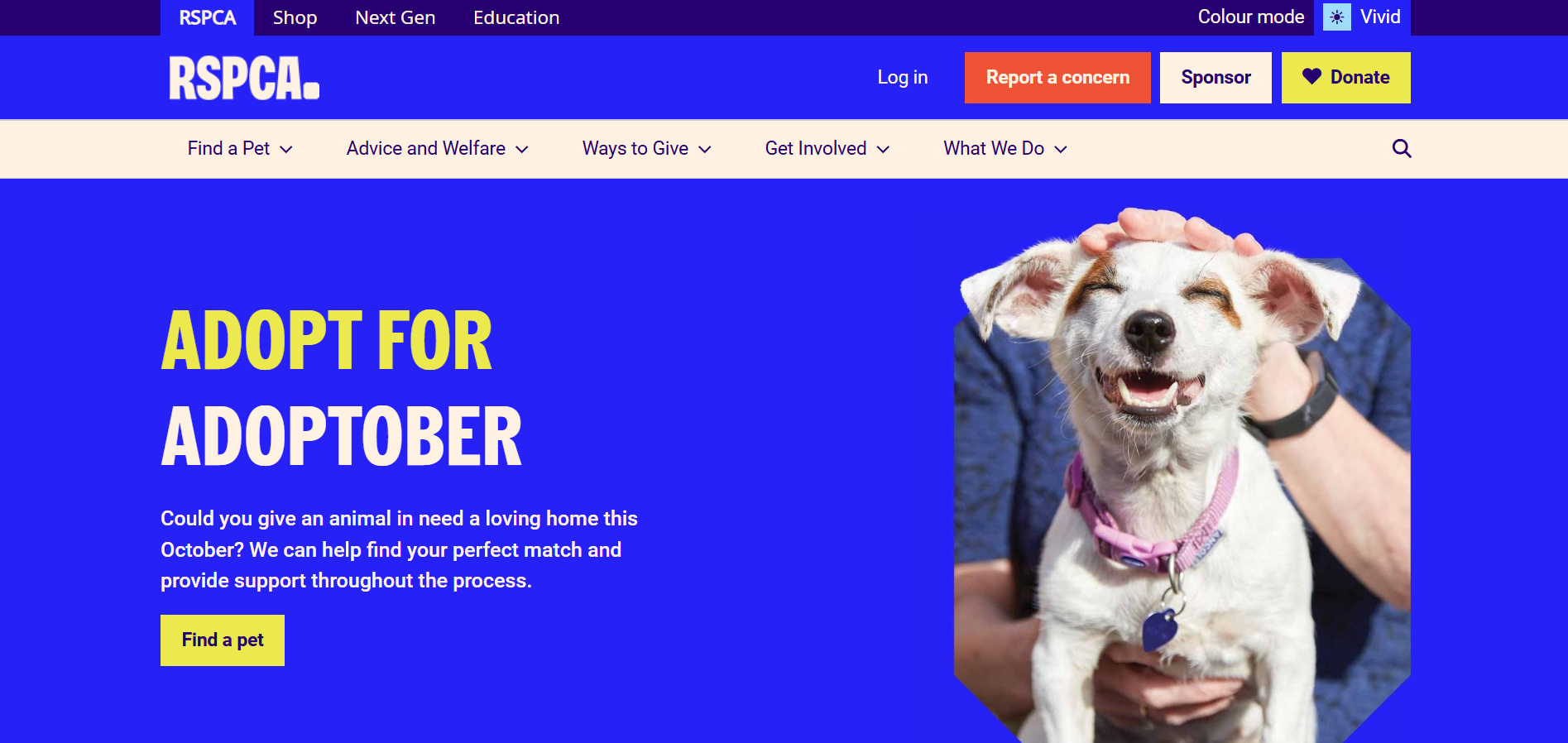
In my design, I would implement a light and dark mode instead of using a bright and dull colour scheme. This approach would reduce the website’s carbon emissions by incorporating darker colours, as darker screens require less energy than lighter ones. For example, using black and darker tones in dark mode would help reduce the energy consumption associated with displaying brighter colours, contributing to a more eco-friendly site.
To further support accessibility, I would set dark mode as the website’s default. This would benefit users with visual impairments by minimizing eye strain, as darker backgrounds are often easier on the eyes and make text more readable, especially in low-light settings. Setting dark mode as the default could reduce the risk of discomfort or harm for visually impaired users who may struggle with bright screens.
This design choice balances both accessibility and sustainability, giving a user-friendly interface that supports visually impaired users but also lowers the website’s environmental impact. With dark mode as a default and light mode as an option this helps create a more inclusive and responsible website.
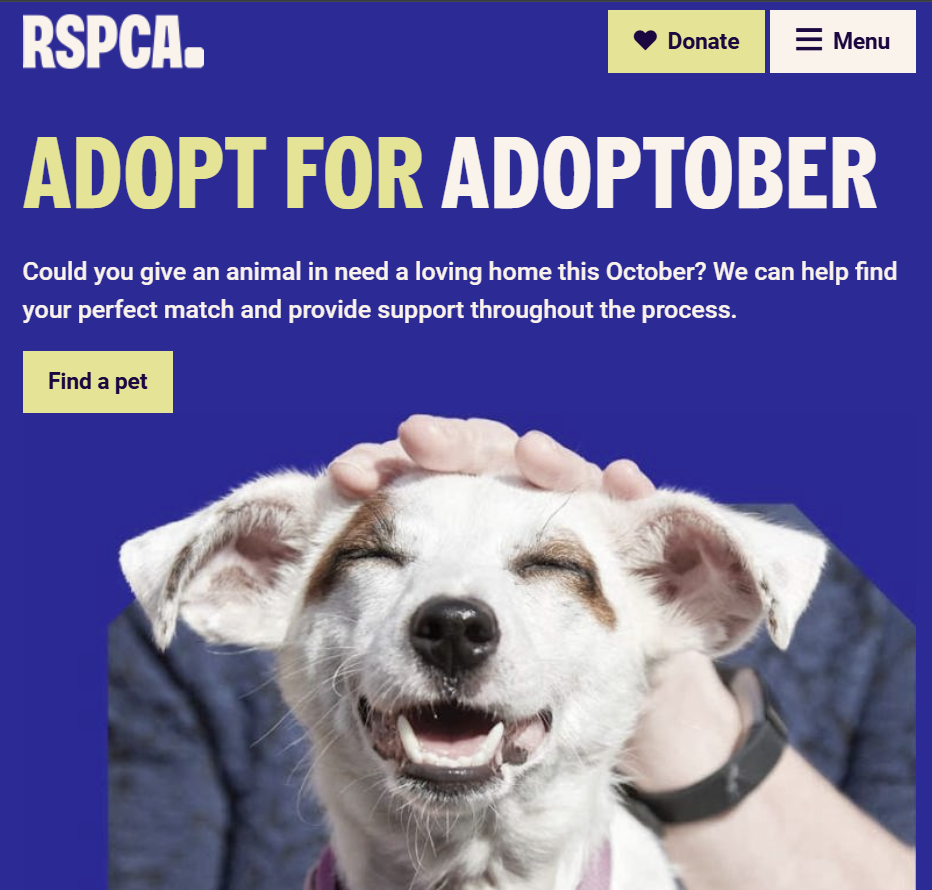
This is the website tablet version that has scaled down slightly which shows that this website is responsive. As seen above the menu buttons at the top of the page have disappeared which further reflects the consideration taken to remove buttons that are lower on the hierarchy of importance.
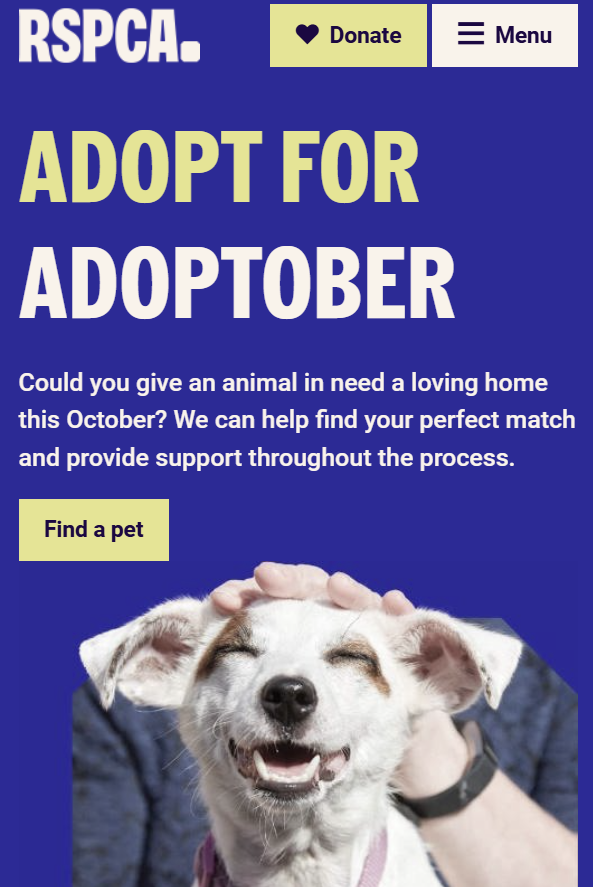
However for the mobile version there is minimal difference between the mobile and the tablet version. The only difference that is visible is that there is now even less space between all of the items whilst scaling down the size of the photo of the dog to keep it fully visible.
Post 4: Digital Marketing and Web Technologies
Basic Concepts Of SEOS
An SEO (Search Engine Optimisation) is a practice that companies use to ensure that their website comes up first after a user searches a topic up on search engines such as Google, this means that it’s easily discoverable by people interested. Some basic concepts SEO strategies include:
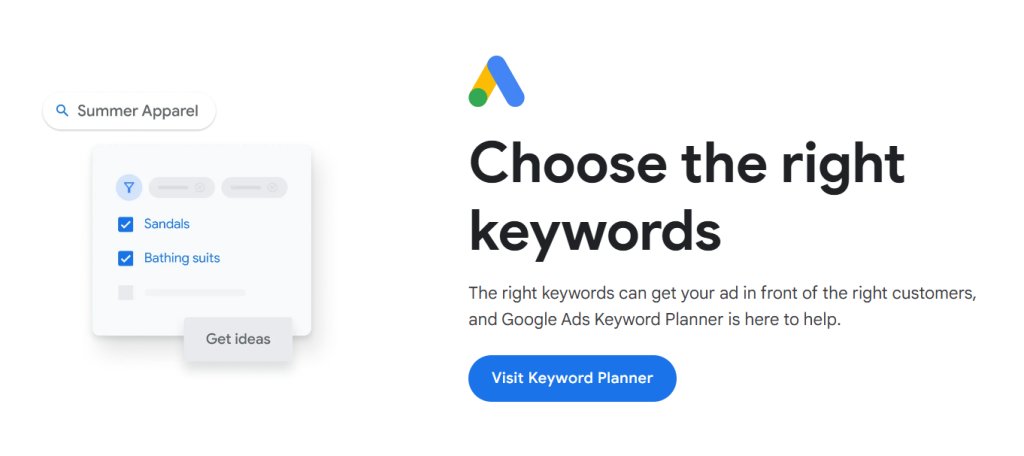
Keyword Research, this involves finding relevant keywords that users might search, such as “charity” or “help the homeless”. Companies such as Google offer helps with Keyword Research through services like Google Ads which includes it’s own “Keyword Helper” https://ads.google.com/intl/en_uk/home/tools/keyword-planner.
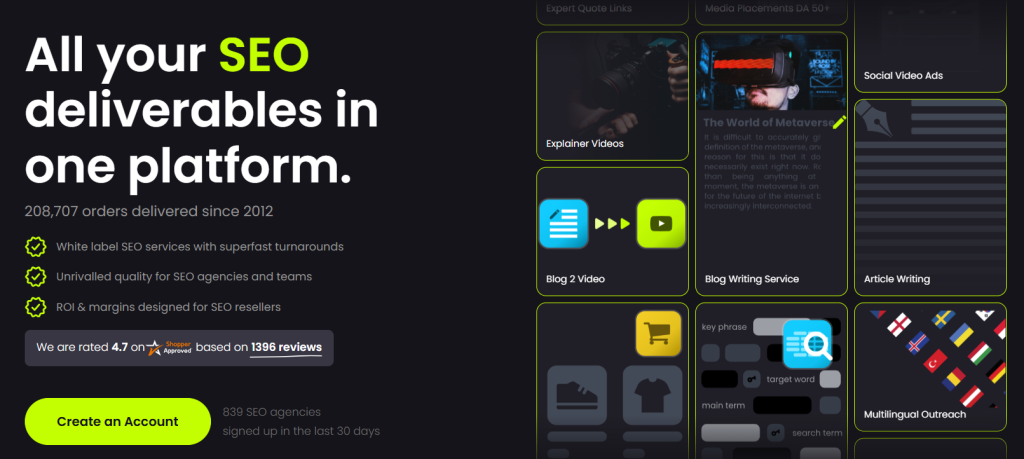
Link Building, This involves placing links on your website that direct to reputable external sites, as well as having credible websites link back to your own. Examples of reputable sites for non-profits include news outlets that have reported on the organization’s work or partner organizations that have collaborated on projects. These backlinks enhance credibility and improve search engine rankings by associating with authoritative sources. Companies also offer help to non-profits and ordinary organisations to help with link building, as example of this is FATJOE https://fatjoe.com/ who use tools such as an infographic embed code generator and a no follow link highlighter to help with link building.
Social Media Strategies
Non-profits use social media by sharing posts, staying active on websites such as Facebook and Instagram, and engaging with their audience. This helps them spread awareness, reach more people, and connect with followers. Through social media, they can easily encourage donations with interactive campaigns and stories. Some of the strategies they may use are:
Consistency and Scheduling, this help non-profits keep a presence online. When non-profits post regularly, people start to expect new updates on their stories and supportive work. Scheduling tools that are built into most social media apps such as TikTok allow these organizations to plan posts ahead of time. This strengthens their online presence, expands their following, and keeps supporters continuously engaged with their goals. Through this, non-profits make sure they’re an active part of their supporters online experience.
Campaigns and Hashtags, These are ways that help non-profits expand their reach through engagement. Campaigns that focus attention on a specific goal, such as raising funds or spreading awareness, often creating momentum around a cause. Through calls to actions, campaigns make it easy for followers to understand and get involved, this encourages donations and sharing on social media. Hashtags link posts across social media, making it simple for people to follow and participate in a conversation. When a non-profit creates a unique hashtag such as #CleanWaterForAll, supporters can use it in their own posts, spreading the word and building a larger community around the cause.
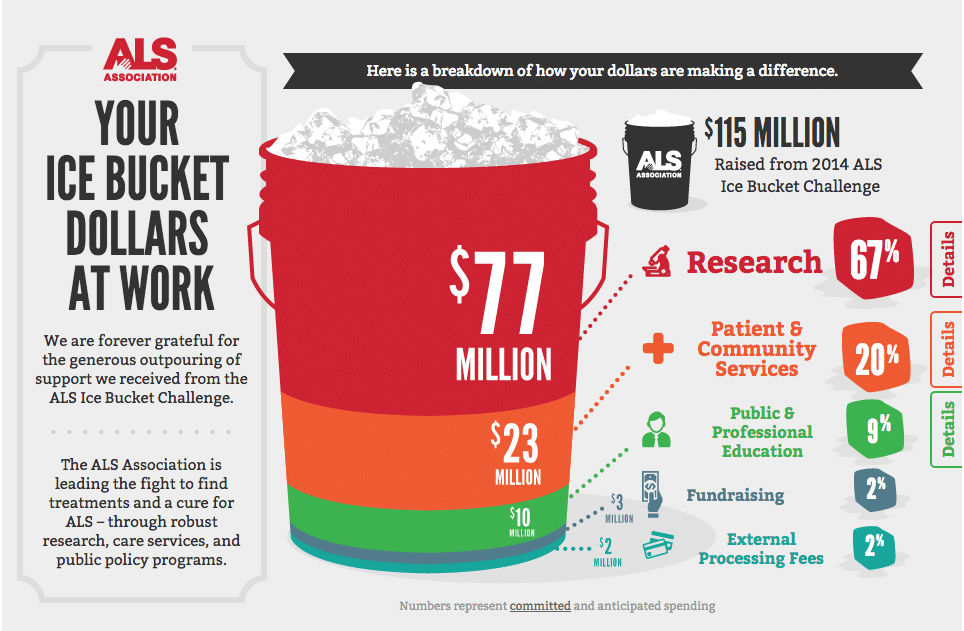
An example of this would be the ALS Ice Bucket Challenge, The ALS Ice Bucket Challenge was a campaign launched in 2014 to raise awareness and funds for ALS (amyotrophic lateral sclerosis) research. People filmed themselves dumping a bucket of ice water over their heads, then nominated others to repeat and donate to ALS charities. The campaign raised over $115 million for the ALS Association. The hashtag used, #ALSIceBucketChallenge, allowed users to share their videos and helped the campaign trend across the world.
References
May, M. (2024) Almost a third of charities experienced a cyber breach or attack in last 12 months, survey finds. UK Fundraising. Available online: https://fundraising.co.uk/2024/04/12/almost-a-third-of-charities-experienced-a-cyber-breach-or-attack-in-last-12-months-survey-finds/ [Accessed 5 Nov. 2024].
We Believe We Can End The Water Crisis In Our Lifetime. (n.d.) Charity: Water. Available online: https://www.charitywater.org/uk [Accessed 5 Nov. 2024].
American Red Cross (n.d.) American Red Cross. Redcross.org. Available online: https://www.redcross.org/ [Accessed 5 Nov. 2024].
Donate to Walk for Teen Suicide Prevention, organised by Grace Rose. (n.d.) gofundme.com. Available online: https://www.gofundme.com/f/walk-for-teen-suicide-prevention [Accessed 5 Nov. 2024].
Wholegrain Digital (n.d.) Website Carbon Calculator | How Is Your Website Impacting the planet? Website Carbon Calculator. Available online: https://www.websitecarbon.com/ [Accessed 5 Nov. 2024].
Find Your Campaign Keywords with Keyword Planner – Google Ads. Available online: https://ads.google.com/intl/en_uk/home/tools/keyword-planner [Accessed 5 Nov. 2024].
FATJOE. The Smarter Way To Get SEO Done. (n.d.) FATJOE. Digital Marketing Services On-Demand. Available online: https://fatjoe.com [Accessed 5 Nov. 2024].